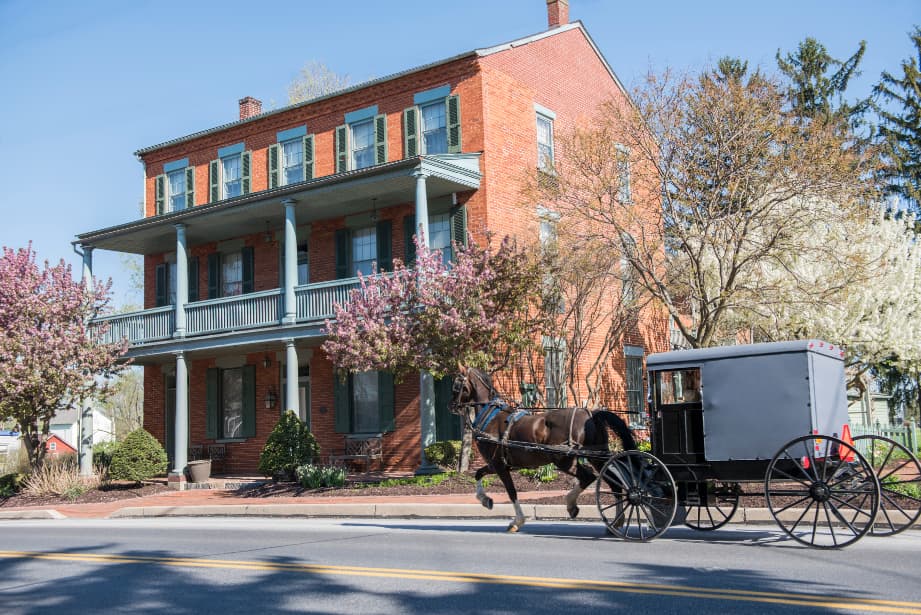
If you’re planning a visit to Lancaster County, you may wonder, where did the Amish come from? Their story begins long before horse-drawn buggies traveled Pennsylvania roads. It starts in Europe, where a group of Christians chose to practice their faith differently.
Today, Lancaster County is home to the largest Amish settlement in the United States. The area’s rolling farmland, covered bridges, roadside markets, and family farms draw visitors from across the country. Learning about Amish history adds another layer to the experience and gives you a greater appreciation for the community that continues to shape the region.
This guide explains where the Amish originated, why they came to America, and how their beliefs continue to influence daily life in Lancaster County.
Where Did the Amish Come From?
The Amish trace their history to the Anabaptist movement, which emerged during the Protestant Reformation in sixteenth-century Europe. Many early Anabaptists lived in parts of present-day Switzerland, Germany, and nearby regions.
The Anabaptists believed that baptism should follow a personal decision to accept the Christian faith. At the time, most churches baptized infants. This difference placed Anabaptists in conflict with both government and church leaders.
As persecution increased, many Anabaptists met in secret and moved from place to place to practice their faith. Their commitment to religious freedom shaped the Amish community that exists today.
Although people sometimes refer to the Amish as a separate religion, their history begins with a larger Christian movement that emphasized faith, humility, and discipleship.
That history also explains why the Amish have close ties to another religious group: the Mennonites.
The Amish Have Their Roots in the Mennonite Community
Both groups share the same Anabaptist foundation and many of the same Christian beliefs.
In 1693, Swiss minister Jacob Amman called for stricter church discipline and greater separation from the surrounding culture. His followers became known as the Amish, a name derived from Amman’s surname.
While Amish and Mennonite communities share common origins, they developed distinct traditions through the centuries. Amish churches generally maintain a more conservative lifestyle, placing strong emphasis on simplicity, community, and preserving long-standing customs.
Each Amish church district follows an unwritten set of community guidelines called the Ordnung. These standards shape daily life and guide decisions about clothing, transportation, technology, and other practices.
Because every district makes these decisions locally, customs may differ from one Amish community to another.
How Did the Amish Get to America?
Religious freedom led many Amish families across the Atlantic during the early eighteenth century.
William Penn established Pennsylvania as a colony where people from different religious backgrounds could practice their faith without persecution. That promise attracted Amish immigrants seeking a peaceful place to raise their families and worship freely.
Many Amish families arrived during the early 1700s and settled in southeastern Pennsylvania. The fertile soil, mild climate, and strong farming opportunities made Lancaster County an ideal place to build lasting communities.
As these settlements grew, the Amish established churches, farms, and family businesses that reflected their values. Their traditions became woven into the character of the region.
Today, visitors still see many of those traditions while traveling through Lancaster County’s countryside.
Why Did the Amish Settle in Pennsylvania?
Pennsylvania offered more than religious freedom. It also provided the resources needed to build successful farming communities.
Lancaster County’s rich farmland allowed Amish families to support themselves through agriculture. Farming encouraged close family relationships and strengthened the sense of community that remains central to Amish life.
Over time, Amish families expanded beyond farming into skilled trades and small businesses. Many now operate furniture shops, quilt stores, produce stands, bakeries, greenhouses, and woodworking businesses throughout the region.
These family-run enterprises continue to reflect the Amish commitment to quality craftsmanship, hard work, and service.
Their presence also shapes the character of Lancaster County. Visitors come here not only to enjoy beautiful scenery, but also to experience a community that has preserved many traditions for nearly three centuries.
Why Is Lancaster County So Closely Connected to Amish Culture?
Lancaster County’s history and Amish culture have grown together for generations.
The county’s rural landscape still features working farms, one-room schoolhouses, horse-drawn buggies, and family-owned businesses. These traditions create an experience unlike almost anywhere else in the country.
At the same time, Lancaster County continues to grow and welcome visitors from around the world. Local communities balance modern tourism with respect for Amish neighbors who value privacy and faith-centered living.
One of the best ways to experience this landscape is by leaving the main highways behind.
Bird-in-Hand’s Amish Farmland Tour takes guests through scenic back roads where local guides share stories about the area’s history, agriculture, and Amish heritage. Along the way, you’ll gain a deeper understanding of the countryside that generations of Amish families have called home.
Explore the Amish Farmland Tour
As you travel through Lancaster County, you’ll notice that the Amish lifestyle centers on much more than transportation or clothing. Their beliefs shape every part of daily life.
Is Amish a Religion or a Lifestyle?
People sometimes ask whether being Amish is a religion or a lifestyle. The answer is both.
The Amish belong to a Christian faith community that grew from the Anabaptist movement. Their beliefs shape the way they worship, raise their families, work, and interact with their neighbors.
Their commitment to humility, simplicity, forgiveness, and community influences daily decisions. These values guide everything from church services to family life.
Many people associate the Amish with horse-drawn buggies and plain clothing. Those customs reflect deeper religious beliefs rather than traditions followed for appearance alone.
Another important part of Amish life is the Ordnung, an unwritten set of guidelines followed within each church district. The Ordnung shapes decisions about technology, transportation, clothing, and other aspects of daily living.
Because each district establishes its own guidelines, visitors may notice differences between Amish communities. One group may allow certain tools or equipment, while another may choose a different approach.
These choices reflect shared beliefs rather than a rejection of progress.
Where Do Amish People Live Today?
Although Lancaster County receives the most attention from travelers, Amish communities exist across the United States and Canada.
Pennsylvania remains home to the largest Amish settlement, centered in Lancaster County. Large communities also live in Ohio and Indiana, along with dozens of other states.
Most Amish families choose rural areas where they can maintain close-knit communities and continue farming or operating family businesses.
No matter where they live, Amish communities share many of the same core values. At the same time, each church district makes local decisions that reflect its own traditions and practices.
Visiting Amish Country Respectfully
Learning about Amish history creates a richer experience when you visit Lancaster County. Respectful travel also shows appreciation for the people who call this region home.
Keep these simple guidelines in mind during your visit:
- Respect private property and posted signs.
- Share the road carefully with horse-drawn buggies.
- Ask permission before entering private businesses or farms.
- Avoid taking close-up photographs of Amish people.
- Support local farms, markets, restaurants, and family-owned shops.
These thoughtful choices create positive experiences for both visitors and local residents.
If this is your first visit, Bird-in-Hand’s guide, 6 Things to Know About Amish Country, answers common questions and shares practical tips before you arrive.
Experience Amish Country for Yourself
Reading about Amish history provides valuable context. Spending time in Lancaster County brings that history to life.
Take a drive through the countryside. Visit local markets and roadside stands. Enjoy a traditional Pennsylvania Dutch meal. Explore the small towns that have welcomed visitors for generations.
Many guests choose to stay in Bird-in-Hand, placing them in the heart of Amish Country. From there, it’s easy to explore scenic roads, discover local businesses, and experience the slower pace that makes this region memorable.
Whether you’re planning a weekend getaway or a longer vacation, Bird-in-Hand offers comfortable lodging, hometown hospitality, and easy access to many of Lancaster County’s most popular attractions.
Frequently Asked Questions
Where did the Amish people come from originally?
The Amish originated in sixteenth-century Europe. They grew from the Anabaptist movement, which began during the Protestant Reformation. Their roots trace to Mennonite communities in Switzerland and nearby regions before many families immigrated to Pennsylvania in the early 1700s.
Why did the Amish settle in Pennsylvania?
The Amish came to Pennsylvania in search of religious freedom. William Penn welcomed people from many faith traditions, and Lancaster County’s fertile farmland gave Amish families an ideal place to establish farms and build thriving communities.
Where do Amish people live today?
Amish communities live in many parts of the United States and Canada. Pennsylvania, Ohio, and Indiana have the largest populations. Lancaster County remains the largest Amish settlement and one of the best-known destinations for visitors interested in Amish culture.
When did the Amish come to America?
Many Amish families immigrated to Pennsylvania during the early eighteenth century. They arrived throughout the 1700s after leaving Europe to escape religious persecution and establish new communities where they could practice their faith freely.
What state has no Amish?
Most states have small or growing Amish populations, but a few states have no permanent Amish settlements. These numbers can change as new communities form, making Lancaster County and the surrounding region one of the most established places to learn about Amish life.